How to Tell if Your Dog Is in Pain, and What to Do About It
Key Takeaways
- Dogs instinctively hide pain, often wagging their tail even when hurting.
- Watch for trembling, repeated licking, stair hesitation, night pacing, and withdrawal.
- Pain raises stress hormones that can affect mood, sleep, and memory too.
- A vet check to find the cause is the most important first step.
- Warm compresses, soft bedding, and shorter gentle walks give quick comfort.
Dogs hide pain better than almost anyone. Most will wag their tail even when every step hurts.
By the time many owners notice, pain has already changed how their best friend moves, sleeps, and thinks. That is why learning the early signs matters so much, they cannot tell us how they feel, so we have to know what to look for.
Early Signs Your Dog May Be in Pain
Watch for these changes
- Trembling or shaking
- Licking one spot over and over
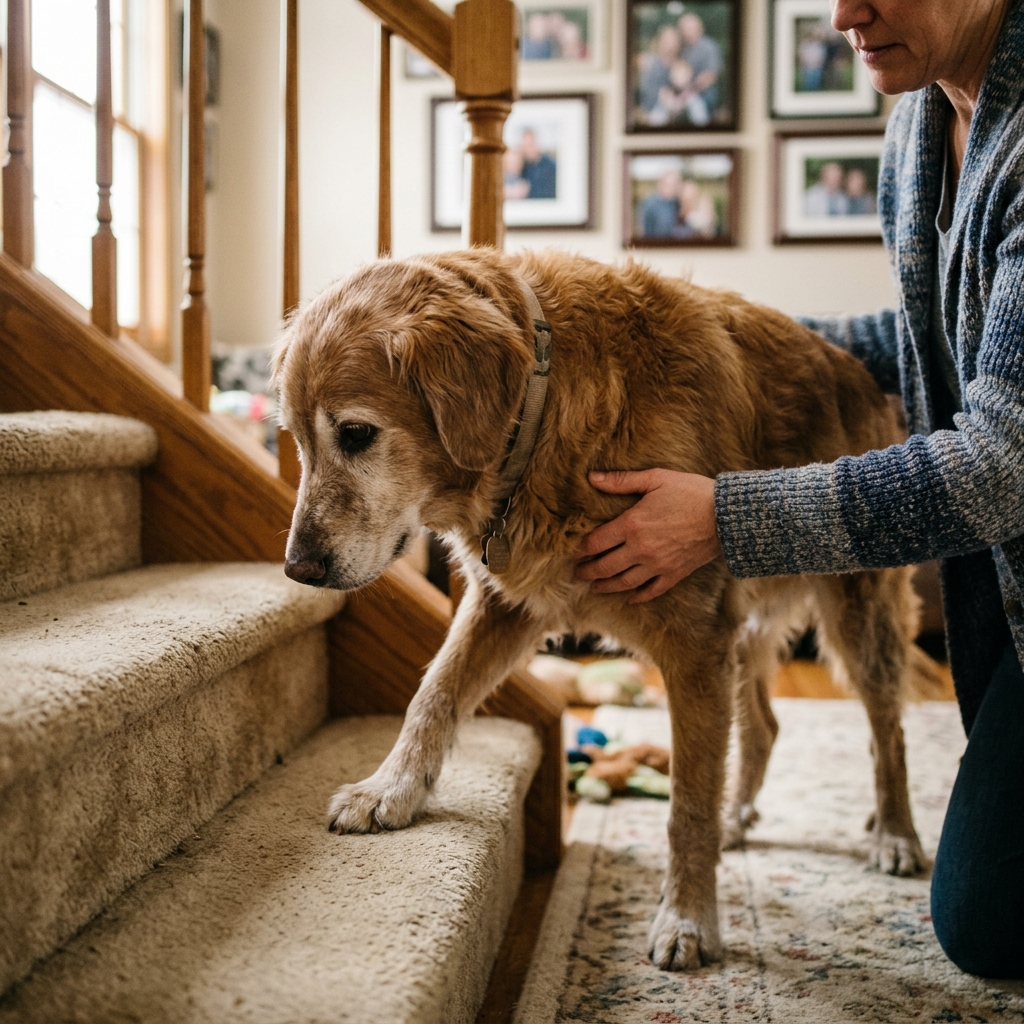
- Hesitation to climb stairs or jump on the couch
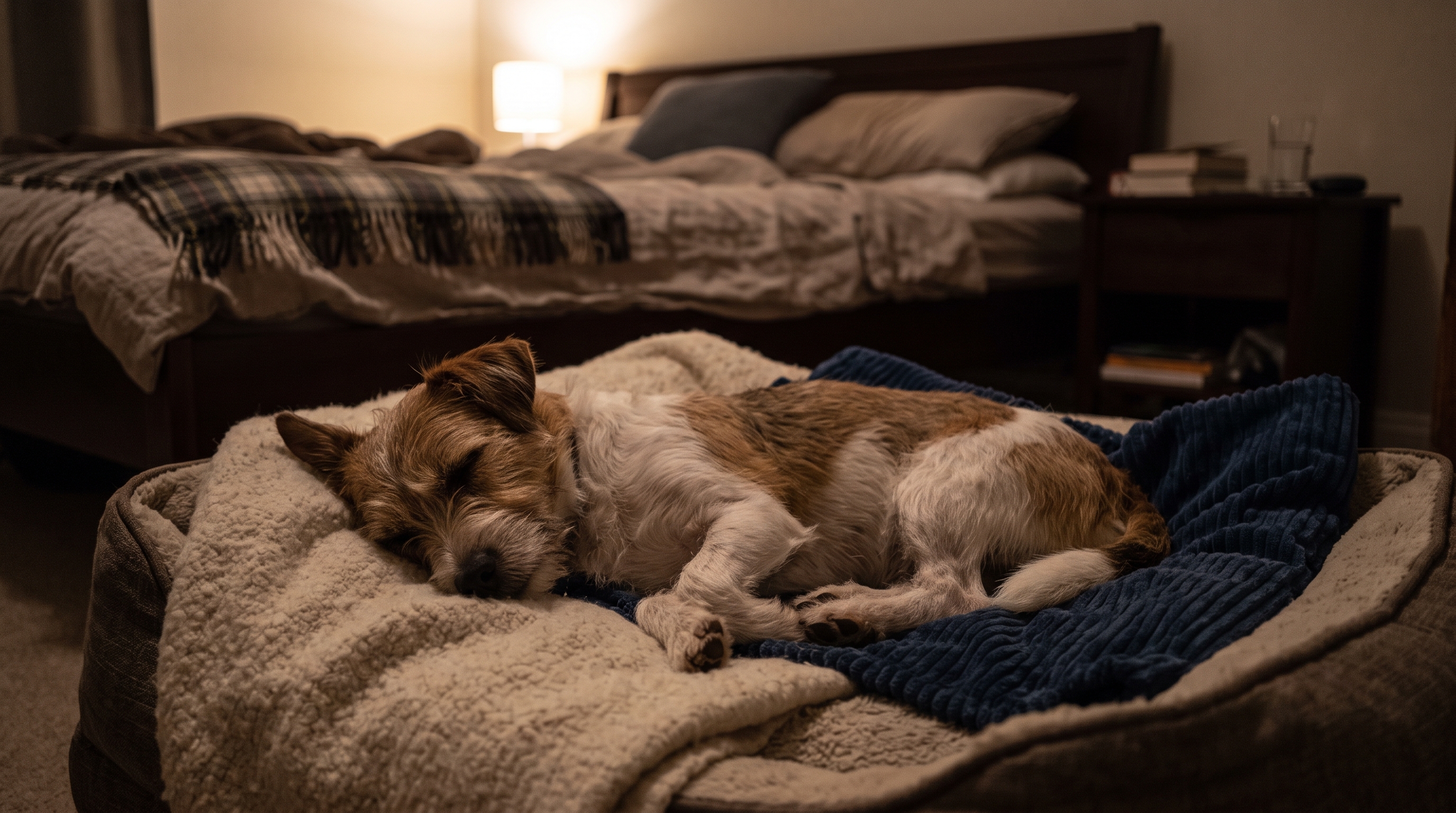
- Sleeping more, or pacing at night
- Pulling away when touched
- Walking slower or limping after play
- Staring into space, refusing food, or acting withdrawn
Pain can come from arthritis, back strain, dental disease, infections, or even gut inflammation. A single sign may be nothing, but a new pattern, or several signs together, is worth paying attention to.
Why Pain Affects Your Dog's Mood and Memory
Here is the part most people miss: pain does not just live in the body. It affects the brain.
When pain lingers, stress hormones rise. That can cloud focus, disrupt sleep, and make a once-happy dog seem anxious or confused. It is why so many dogs with physical pain also show mood or memory changes. Supporting the body and the brain together tends to help more than treating either alone, similar to what we cover in calming an anxious dog.
What You Can Do to Help Today
Comfort steps you can start now
- Schedule a vet check to find the underlying cause. This is the most important step.
- Use warm compresses for stiffness.
- Keep bedding clean, soft, and supportive.
- Take shorter, slower walks on soft ground.
- Record symptoms on video so your vet sees exactly what you see at home.
These small steps give comfort quickly. For longer-term support, healthy weight, gentle movement, and joint-supporting nutrition all help your dog stay mobile. If your dog is older, our guide on helping an aging dog pairs well with this one.
When something feels off in your dog, trust it. Pain hides well, but a loving owner often senses it first.